Showing posts with label Japan. Show all posts

Friday, October 19, 2007

The Best of Tokyo, According to Lynn

Having lived in Tokyo for almost six years, I get approached a lot by friends and cyber-acquaintances for recommendations on sights to see and places to eat when they visit Japan. While I am by no means an expert on either subject, I do have a list of favorites. After typing out more or less the same responses at least half a dozen times in the past year, I finally got smart and decided to write it down in my blog so that the next time I’m asked I could easily attach a link instead of digging up all the information from the depth of my drawer and computer files all over again. So here it goes, in no particular order and highly subjective:

Asakusa:
You will see kaminarimon when you get out of the Asakusa subway station. It is the gateway with the giant red lantern that’s on all the tourist information brochures and post cards. Walk through it to find yourself in a little covered street lined with souvenir stores selling everything from snacks to key chains to doggie outfits. Most of them are quite cheesy but there are a few gems tucked in between, such as the store selling antique hair ornaments and combs and a paper store with endless varieties of Japanese paper. At the end of this street, just before you reach the Kanon temple, you will probably see some people waiting in line on the right side of the street. This is a must-stop for me every time I go to Asakusa, a little store selling Age-manjus, which are little deep fried buns with different fillings. My favorites are sesame and pumpkins.

Take a stroll in the kanon temple after your snack of Age-manju. Work up an appetite by seeing how ravenous the pigeons are, and find your way back up the market street. On one of the side streets on your right is a famous tempura restaurant. I can’t remember which street it is, but a fail-proof way to find it is to take a short walk down any street and look for a line of people waiting outside. I’ve personally never tried it because I haven’t had much luck with that place, but if you must eat lunch in Asakusa I suggest you eat there. Otherwise you’re likely to end up in one of the many many tourist trap restaurants in the area and be hugely disappointed. After lunch you can walk across the red bridge and take a look at infamous “golden turd” perched on top of the Asahi building.

Kappabashi:
If you have even the slightest interest in cooking or kitchen appliances, you must not skip this stop. It is on the Tawaramachi stop on Ginza line, within walking distance to Asakusa. Most shops are closed on Sundays and Public holidays and are crowded on Saturdays so the best time to go is on a weekday, during the day. I can go on and on about the things you will find on this street, but suffice to say, if it has anything to do with food, you’ll find it here. For dessert enthusiasts who don’t have a lot of time to check out all the stores, go straight to Okashinomori (it’s on the second floor with a small street entrance). You’ll find most of everything here, although prices tend to be slightly higher.

Meiji Jingu aka Meiji Shrine
Subway station Jingumae on Chiyoda subway line or Harajuku on the JR Yamanote line.
Right smack in the middle of lively Harajuku, yet as soon as you step through the first gigantic torii only tranquility and utter peacefulness awaits you.

Place a 100yen coin in a slot and shake out a stick from a metal can. Find the drawer with the corresponding number on the stick and get your fortune (it’s in English too). If it’s good fortune, keep it with you so it can come true. If you don’t like it, tie it on a tree branch so it can be taken away with the wind. Or purchase a wooden plaque and write your wish on it, then tie it to the designated racks where thousands of others have done the same.

If you are lucky you might catch a glimpse of the Crown Prince or the Prime Minister at the shrine or a wedding procession all decked out in traditional kimonos, led by a priest under a big red umbrella.

Wear appropriate shoes because you’ll be walking on tiny pebbles the entire way in, no short cuts.

Harajuku – Omotesando
After visiting the shrine, take a left and walk towards Harajuku station. Walk past the first station entrance and at the next, smaller entrance cross the street at the traffic light. You are now at the entrance of Takeshita-dori, home to the mega 100yen shop and cos-play costume stores. Walk down this street and you’ll come out on Meiji-dori. Take a right and walk to the intersection marked by La Foret on your right and Gap on your left. Here you can eigher continue on Meiji-dori to go to Shibuya, or take a left and walk down Omotesando-dori, dubbed the Champs-Élysées of Tokyo, it is home to luxury brand boutiques and the super chic Omotesando Hills. You'll also love the unique architecture of some of the flagship stores. My favorite is the bubble-like Prada store on the other side of Aoyama-dori, the Japan Nurses Association HQ, which houses Burberry, and Dior, whose silvery curtain can change color.

If you get hungry while on Omotesando, there are a few places to grab a quick bite:
Jangara Ramen, 1-13-21 Jingumae, Shibuya-ku
Get the “all-in” (zenbu iri) or, if you don’t like mentaiko, ask for mentaiko-nuki. The ramen is Kyushu styled, with a very rich broth. Best to avoid in summer.

Harajuku Gyoza, Jingumae 6-2-4, Shibuya-ku, behind Kiddie Land toy store
They have four types of dumplings: boiled with chive, boiled without chive, fried with chive, fried without chive. Get one of each, it’s very cheap. The chili dipping oil in jars placed on the table is not to be missed. I also like to order their cucumber salad with a very nice peanut dressing.

Azabu Juban – Roppongi Hills
Take exit 5a (Shin-Ichinobashi intersection) of Azabujuban station on the Oedo line, turn left and walk towards Roppongi Hills, turn left again at Jomo gas station. On the left side of the street is a little store called Naniwaya selling nothing but taiyaki. Unlike other taiyaki’s spongy shell, theirs is crispy and thin. They only have one type of filling too: red bean paste. On most days you’ll have to wait for at least 20 minutes but if you are lucky and go on a rainy day you may not have to wait. It’s best to eat it right there on the stop when the skin is still crunchy and the filling piping hot.

Continue walking down the street and you will hit Azabu Juban’s main street. Turn right and shortly afterwards you’ll see a store on a street corner selling mostly snacks made of peanuts. The store is called Mamegen. My favorites are the umeshiso and green tea covered peanuts.

Follow the main street to the end to find yourself at TV Asahi’s new modern headquarter. Check out the Mori garden and explore Roppongi Hills. Don’t miss the spider sculpture and the observation deck in Mori Tower.

Restaurants:
The restaurant that we visited the most was probably Teyandei, our neighborhood Izakaya. We’d show up on a Sunday night with no reservation and it would be ok. Weekdays are little more tricky so it’s best to call ahead. Our favorite dishes there are chirimen cabbage salad with jakko (ask the manager to make it for you if it’s not on the menu); unagi tamago atsuyaki; deep fried yamaimo (mountain yam); gomadofu (sesame tofu); buta-no-kakuni (braised pork); and ochatsuke (rice with dashi poured on top).

One word of warning, the restaurant’s entrance is not very conspicuous. From the outside it looks like someone’s house and the sign is a wooden board no bigger than a name card nailed to the wall. Walk upstairs, however, you’ll see an unmarked wooden door. This is the entrance to Teyandei.

While in Roppongi Hills area, there are two nice restaurants in the neighborhood:
L’Atelier de Joel Robouchon (5772-7500) and Aburiya Fudo Azabu-Juban 1-8-6 (3568-6224). It goes without saying that Robouchon needs no further intro, and the food is excellent. However, they only take reservation for the 6:30pm seating and the place only has counter seats. Aburiya Fudo is an Izakaya type of restaurant specializing in slow grilled food. From the freshest of mountain vegetables to the fattiest cut of meat, they do everything perfectly.

Daiwa Sushi in Tsukiji fish market is worth a visit if you don’t mind waiting. (there is ALWAYS a line) You can get up early, catch the tuna auction and head over to Daiwa before 6:30am or some sushi breakfast. The Omakase set contains the freshest catch and varies from day to day. We always order that plus a few pieces of uni and ootoro to finish. Hurry up and go before the entire Tsukiji market is torn down and moved to its new locations.
Tsukiji Market Central Building 65-2-1

If you are in the mood for some fine dining while in Tokyo, Sens & Seveurs atop the Marunochi Building will never disappoint. The food is always fantastic, the staff always attentive and the view is amazing too.

Patisseries
My favorite subject. First, let me just say that if you go to the basement of Mitsukoshi or Isetan or any major department store you will be spoiled for choices and most of them are really good. But if that’s not enough to satisfy your very discerning taste buds, I have the following recommendations. They are, in my opinion, crème de lacrème. I hope you enjoy them too.

Idemi
3-6-17 Kyobashi, Chuo-ku 3538-6780
Get there early (before 9:30am) to avoid disappointment, as most items will be sold out by lunch hour. Many cakes cannot be taken out of the shop so be prepared to eat everything there.

Patisserie Paris S’eveille
2-14-5 Jiyugaoka, Meguro-ku, Tokyo 5731- 3230

Sadaharu Aoki
3-4-1 Marunouchi, Chiyoda-ku, Shin-Kokusai Bldg 1F 5293-2800

La Maison du Chocolat, next door to Sadaharu Aoki, so you might as well. Their chocolate tart is very good.

Patissier Chocolatier Frederic Scailteur
1-11-10 Azabudai, Minato-Ku

Pierre Hermé
La Porte Aoyama (5-51-3 Jingumae, Shibuya-ku) next to the UN building.

My “To-Visit” list:
Mont St. Clair
2-22-4 Jiyugaoka, Meguro-ku, Tokyo

Toshi Yoroizuka
Midtown, Tokyo

Sunday, August 14, 2005

The Things that Nobody Ever Told You About Hanabi


“You are turning into a COMPLETE Japanese!”

Jason said to me when I told him I’d be leaving the house at 2:30pm to meet my friend Tanya at Odaiba seaside park in time to watch the Tokyo Bay fireworks (hanabi) show. Jason, on the other hand, would have nothing to do with the hot and humid weather, the crazy crowds, or the you’ve-gotta-be-there-four-hours-before-the-show crap. So I embarked on my first hanabi trip of the year alone with camera, tripod and picnic food in tow.

Why does she need to leave so early, you say? Let me enlighten you.

First of all, I’ll have you know that leaving one’s house five hours before the show even though one lives only half an hour away from Tokyo Bay is in fact not early at all. By the time I got to Shinbashi station to change to the monorail (Yurikamome) there were so many people going the same direction that it took me half an hour to buy the train ticket. Secondly, the reason I didn’t have to go until so LATE, was because Tanya’s friend who lives in Odaiba (Tokyo’s manmade island) went to the beach at 8am to secure a place for the rest of the group. Thirdly, if you don’t arrive at the beach early enough, even if you have friends nice enough to reserve a space for you, you may never find them in the sea of people on the beach (seriously, you have no idea how many people can pack into a tiny stretch of beach), especially after dark.

So you see? You have to have the right mind-set for an event like this. The hanabi is not a single event (it also involves eating tons of food and drinking copious amount of alcohol before, during and after the show), nor should you expect to sit under the cool summer sky and enjoy an hour-long spectacular show without paying some price.

This year, the price included:
- Waiting in line for 30 minutes to buy my monorail ticket (lesson #1: have prepaid train card ready in situations like this).
- Taking shelter under a tarp when it rained for one hour just before the show, getting sand into everything (lesson #2: bring umbrella even if it was sunny when you left the house)
- Running back and forth between the monorail station, the JR station, and the water taxi station after the show trying to figure out which has the shortest line (lesson #3: don’t linger after the show. Better yet, get up and leave before the finale)
- Lining up in the street for 40 minutes to set foot into the monorail station (see lesson#3)
- Getting caught in a downpour when I got out of the train station so I had to call Jason to come and pick me up (see lesson #2)

Next year, we’ll try to get even closer. (More photos here.)

Friday, April 15, 2005

Falling, Fallen, Gone


A full day of rain on Monday brought the 2005 hanami season to an end (hanami means viewing of flowers). Cherry blossom petals floated down in twirling dances from the branches and landed on every horizontal surface within reach: playgrounds, stairs, cars, drinking fountains… Overnight, the trees gave up their white geisha makeup and sprouted the freshest shade of spring green.

Even though this is my fifth hanami in Japan, I never seem to tire of this event. I love seeing the sea of white froth on treetops, even though they make all the photos look blanched. I also cherish all the times when I turn a street corner and come face to face with one single sakura tree in all of its full blooming glory. But this year’s hanami was truly the best I’d ever experienced (best weather, best flower, and best of all, I didn’t have to work so I went hanami-ing everyday for seven days straight) so I’m going to attempt to highlight some of the interesting parts of this phenomenon that is so uniquely Japan.

Such is the obsession with hanami that weeks before any sakura tree even showed any signs of a flower bud, you could find out the predicted date of blossom on the internet, categorized by city and by individual parks. (Because sakuras bloom so briefly, it is essential to catch them at the peak.) From what I can tell, when most of the sakura trees are about 50% blooming, the madness of hanami is officially in full swing.

First, you have to understand that everybody in Japan (everybody plus everybody’s visiting friends and family, plus everybody’s dog) comes out for hanami, so crowds is as much a part of hanami as alcohol and food. Due to this massive spillage of people to limited coveted spaces under the sakura tree, it is essential that someone goes early to reserve the space for the entire group. In an office, the most junior person is usually entrusted with this important task. On my morning walk last Friday, before the big hanami weekend, I saw a variety of place markers, from carefully taped down blue tarps, to a few pieces of haphazardly placed newspapers with a name written on it. It’s strictly a first-come-first-serve system and no one questions the authority of a little piece of paper. When dusk falls, large groups of people will descend on their “reserved” spot, lay down food and drinks, and proceed to hanami.

I also discovered that Japanese people have no qualms about where they go to hanami, as long as there are sakura trees, hence the strange sight of people eating, laughing and drinking to a stupor in the middle of a cemetery (Aoyama cemetery has a large number of sakura trees). There are even food stalls set up among the tombs specifically to serve the hanami crowd. Whatever happened to respecting the dead?

Besides looking at sakuras, I also look at people photographing them. I look at their cameras, their tripods, the kind of bags they carry their equipment in, and the angle they are taking a particular shot. I think the national hobby of Japanese people has got to be photography, and nothing brings out amateur photographers (yours truly included) in drones more than hanami season. There are the obasans and ojisans toting cameras with lens the size of a daikon on one end of the spectrum; on the other end are the young people with their cellphone cameras. My favorite hanami photographers this year is this couple. The husband carries all the photography equipment, and lovingly holds an umbrella over his wife’s head so she doesn’t get sun-burned. How sweet!

So this concludes the 2005 hanami season. It was good when it lasted, but now that it's over, spring can begin! Yippy!

Inexplicable Fashion Trend Part Deux

Along with the half pants of awkward length, another disturbing trend this spring is the cardigan worn backwards, as demonstrated by this lovely young lady.


The first time I saw one, I thought the person had somehow managed to contort her head all the way back (me and my astigmatic eyes). I hoped this was just one single girl’s idea of creative dressing, but knowing how Japanese fashion works, I braced myself for more. Not surprisingly, everywhere I turn my head, there’s another one.

Do they find comfort in wearing their clothes the same way they did their kindergarten smock? Does it bring back childhood memory of being pampered and taken care of? Or are they recently released from a long hospital stay and had gotten so used to tying on the hospital gown in the back that they have yet to adjust to wearing clothes the normal way? Or maybe it’s a new way of incorporating yoga into every aspect of their lives: twist while getting dressed!

Regardless of what’s going on in these girls’ heads, this look is disturbing in so many ways. First of all, when I see a row of buttons on a crew neck cardigan, I expect to see a face at the top of the buttons, instead I see a neckless head of hair! It looks like the head is screwed on backwards. Talk about freaky! Then there’s the problem with the cut. Do they not understand that the front of the torso and the back of the torso have different topography? Do they not feel what is supposed to be the back of the neck hole choking the breath out of them? If it looks UGLY and feels UNCOMFORTABLE, what possessed them to wear it like this?

Saturday, April 09, 2005

Inexplicable Fashion Trend

I admit I don’t do quirky when it comes to dressing but although I’m no Carrie Bradshaw I certainly do read my Vogue and know what’s “in” and what’s “out.” However, a recent trend in Tokyo fashion has me completely baffled: the skinny half pants that awkwardly fall right at knee level. I’ve seen this look all over town ever since the temperature crept up to double digits, and honestly, not one person looked good in them. I mean, unless you are a supermodel with super long limbs, chances are you are going to look like an amputee.

Another thing I’d never been able to understand is the skirt over jeans look. It’s as if the person couldn’t decide when she got up in the morning whether to go with skirt or jeans, so she threw on both, without looking herself over in the mirror before stepping out the door. Having said that, I do admit that certain people, namely those who resemble supermodels in their proportions, can pull this look off if the skirt is flowy and the jeans skinny.

What I saw today on the train, on the other hand, is so … (hmmm, how should I put it, hideous comes to mind, but I am not going to be too harsh) God awful, that I am at a loss for words. And I'm not even going to comment on those black sockies that peak out from the shoes.


Girl, go get yourself a full-length mirror for crying out loud!

Thursday, April 07, 2005

Let the Hanami Begin!

Mori Tower in Roppongi Hills

The cherry blossoms in Tokyo are finally in full bloom! I remember every year around this time for the past three years I wished I could be out enjoying the beautiful sakura instead of sitting in a stuffy office doing meaningless so-called work. This year, I really can.

I’ve been “hanami-ing” (looking at flowers) everyday this week. I have been sticking to the less popular places so far: Mori garden in Roppongi Hills (twice), the Nogizaka shrine (once) and the Aoyama cemetery (everyday walking Libby). I used the sakura in the cemetery as my gauge. Yesterday the flower to bud ratio was still only 50% but this morning, it was a sea of sakura the faintest shade of pink. This means I must now shift into high gear and cover all the sakura-meisho (famous place for viewing cherry blossom) within the next three or four days, before the petals start falling, which is beautiful in its own right (like pink snow flakes) but right now the mission is to look at them while they are on the tree.


A branch of the lone shidarezakura in front of Nogizaka shrine

So the battle plan goes like this: tomorrow I am taking my in-laws to Shinjuku-Gyoen, one of my favorite sakura viewing places, with a large parking lot. My in-laws need a break from walking after I dragged them the long route to Roppongi Hills and Azabu-Juban today. (I don’t think my MIL knew what she was getting into as I innocently pointed to the Mori tower from my house, “Look, it’s just there!”) On Saturday, we will brave the crowd and go to Kamakura (I’m hoping to snap a couple of pictures of the Giant Buddha with sakura branches swaying in front). Sunday we will go to either the Imperial Palace or Yoyogi park, and if we are insane enough, Ueno park. Next week, maybe we’ll go to the Meguro river and look at petals in the water.

Phew, it’s tough to hanami!

Sunday, April 03, 2005

Spring Blooms

Before the sakura come the magnolias.


And the nameless blue flowers.

Wednesday, March 16, 2005

Zojoji - Unexpected Discovery

I had to go to the Minato Ward office recently to change my residential status. It was a beautiful day so I decided to visit Zojoji across the street.


As you can see, the scale is quite impressive. It is the major temple of the Joudo Shu (Pure Land sect) of Buddhism, and was relocated to the present site in 1598 by Ieyasu Tokugawa, the first Tokugawa shogun.

Almost as soon as I walked in, I noticed something very unusual: along one side of the temple wall are rows and rows of little stone sculptures wearing colorful capes. On a closer look, they all seem like children and the plastic toy windmills stuck by almost every sculpture further confirmed my suspicion. Some of them have names written next to them, some of them don’t; some of their caps and capes look new and some look faded, denoting that they haven’t been visited in a while.


What could these statues mean? Are they for children that have passed away? I tried to look for a sign that explains this but found none. When I walked further inside, I found a shrine for a Kannon Buddha that’s responsible for child-rearing. So maybe these statues are guardian angels for living kids? But that just seems so weird that it simply cannot be true.

When I got home, I searched the official Japanese website of Zojoji but it didn’t give a satisfactory explanation so I had to resort to “less than reliable” sources, i.e. other gaijin’s take on this. And I found this which basically says that the statues are dedicated by the parents of unborn children (aborted, still-birth, etc) so that they’d be taken care of in the underworld. Apparently there’s the strange theory that the souls of these children will be tortured otherwise for bringing grief to their parents (what about the aborted one? Who’s causing grief to whom?).

There I thought I was just taking a stroll in the sun. Never did I expect to uncover this never-talked-about Japanese tradition. (If anyone knows otherwise, please let me know).

On a different note, I also found out that 2005 is a very bad year for me, this according to a giant placard hung above the entrance to an important-looking hall in Zojoji. It says I should donate lots of money to the temple in order to have an uneventful year. Yeah, right! Does donating to charities count?

See more pictures of Zojoji here.

Thursday, March 10, 2005

Of Rice, Snow, Earthquakes and Breast Pudding

When I hear the word Niigata, one of the 43? Prefectures in Japan, I immediately think of their fragrant rice and the fluffy snow in the winter. People living outside of Japan probably know Niigata, if they know it at all, because of the devastating earthquake that occurred towards the end of last year. Little did I know that Niigata is also famous for its secret dessert: the breast pudding.

I only found out about this on our recent ski trip to Naeba, in Niigata prefecture. Before the trip, our friend Robbee mentioned that someone who went to Niigata brought him back a special omiyage (souvenir). When he told me what it was I thought for sure it was one of his jokes. I mean, we go to Niigata a couple of times a year, for skiing or hiking, but never did I once see a breast pudding. Could there really be something as vulgar as the name suggests?

After a satisfying crab dinner on our first day in Naeba, we took a inspectorial tour of the many souvenir shops in Naeba Prince Hotel. I saw sasadango (sticky red bean filled rice balls wrapped in bamboo leaves); ibushi-daikon (a type of picked Japanese radish); and every type of red bean paste filled Japanese dessert you can think of bearing Naeba’s name; but no breast pudding. And suddenly I turned around and there it was:


Ok, so they call it bust pudding, but the Japanese really means breast, or boobs.


When you open the box, a cute pop-up Japanese girl in a pink bra (with the clasp conveniently in front!) greets you with a whisper, “Please eat gently.” Ewww, goosebumps!

For the final X-rated image, I invite you to click here (don’t want no pornography on my blog). Again, I say this: ONLY in Japan.

Monday, March 07, 2005

First Signs of Spring


A plum tree in Aoyama cemetery started blooming in mid Feburary.


This sakura tree on the corner of Tokyo Weather Bureau and KRR Hotel, across from the Imperial palace is always way ahead of every other sakura trees in Tokyo. By the time the rest of them start to blossom, this tree will be sporting a full head of new green. Heck, the leaves are already out even now.

Friday, March 04, 2005

Let it snow, let it snow, let it snow!

It's snowing again! Just last week, I thougt for sure that spring is here, and look what we have here now! I took Libby out for a walk to snap some pictures. She did not particularly like the wet snow, but was game enough to put on her fleece lined rain coat and accompany me on this slippery mission.


The snow-covered cherry trees lining the centre boulevard in Aoyama cemetary forms a nice canopy.


And this playground stands desserted.


I have to leave for my cooking lesson in 30 minutes, but I think I will take the subway this time.

10' 40"

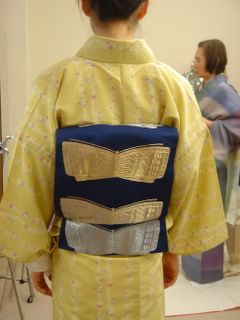
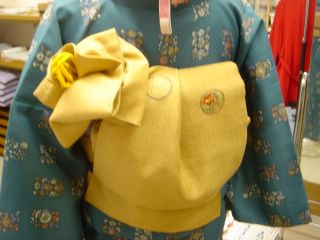
I did a practice run for my kitsuke test next week and clocked in at 10 minutes and 40 seconds to put on my kimono and tie the obi into this.


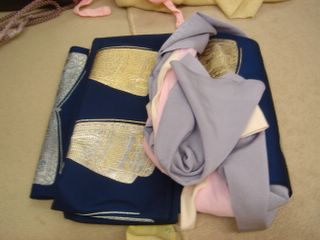
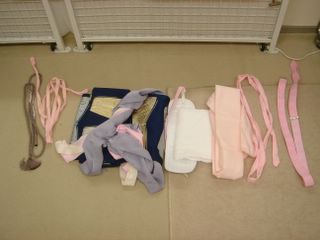
I am allowed to do all the prep work first, before the timer is started, such as setting up the obi and laying out all the necessary strings and whatnot in the order they will be used.


My sensei said 10 minutes and 40 seconds is good for a first try. I just need to shave off that 40 seconds for the test, some how. AND, when I go on to the next level, I have to be able to do this in five minutes. Yeah, right!

Friday, February 25, 2005

Three-month Long Kimono Break

Hello, my name is Lynn, and it’s been three months since I last made it to kitsuke lesson (Kitsuke・着付け means the act of putting on a kimono).

I stepped sheepishly into the classroom, and was immediately greeted by Takamoto sensei’s warm hello. As you recall, she’s the one who used me as a mannequin to practice her very own kitsuke.

A round of greeting and catching up later, we got down to business. First, I had to put on my own kimono, as we do at the beginning of every lesson, even though today I won’t be tying the obi on myself. It was comforting to know that after three months I haven’t completely forgotten the basics. I did forget, however, how to tie the Otaiko・お太鼓 (translation: big drum, the most commonly seen boxy looking knot worn by married women). So I reviewed that too.

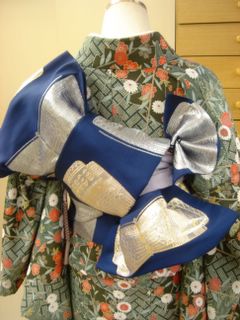
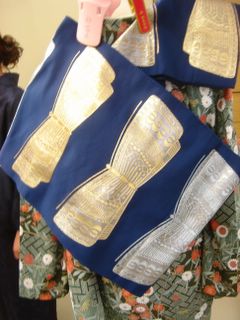
Next up, today’s obimusubi (帯結び・obi knot): Tateya (立て矢: vertical arrow) and Hirosue Tateya (広末立て矢: vertical arrow with a fanned out end). Hirosue Tateya or some of its variations are the most commonly used obi knots by brides on their wedding day after changing out of their white wedding kimono. You can also see them on young girls on Coming of Age Day (成人の日). In short, it’s a knot used on festive occasions, and this is what Hirosue Tateya (the more elaborate of the two) looks like.


Not particularly pretty if you ask me. Or maybe I am biased because it was a pain in the you-know-what to tie the darn knot. Because it is slanted, the balance is extremely important, and the rule of 1/3 is strictly followed every step of the way. One has to ensure that the bottom “wing” is not too large; and that the angle is just such. A special pillow (one that rotates) and a string with three elastic loops were used. When making the two “wings” of the knot, three clips were engaged to hold the yards of fabric in place; it was also a time one wished one had an extra hand. Thank goodness I was using my practice obi made out of polyester, which was relatively light. I couldn’t even begin to imagine tying a heavy, elaborately adorned silk obi into this knot.


While I was struggling with the darned “Vertical Arrow” a classmate of mine made this pretty knot, called Beni Tsubaki (red camellia). See flower on the left.


Now, isn’t this so much better looking than the Tateya? Can you see how the Tateya differs from Hirosue Tateya?


Yup, it’s missing the little fan shaped end on the upper right corner.

Next week, I start reviewing all the knots I learned in the practical lessons. Then it’s time for the test: putting on a kimono and tying the Otaiko knot on myself in less than ten minutes. I definitely need lots of practice to pass this test.

Wednesday, February 23, 2005

IMBB 12 - Natto: You are what you don't eat

I didn’t find out about the 12th IMBB until after the fact. Then when I saw the theme, I wish I hadn’t missed the deadline, for I have the perfect food to subject myself to as the victim: natto (納豆) a.k.a. Japanese fermented soybeans. The Japanese believe that this verging-on- rotten bean product is extremely good for your health. It supposedly has all these enzymes unique only to natto that prevent blood clots and ward off heart attacks. It’s even said to be good for pets. In fact an ex-colleague of mine feeds his dog one pack a day.

I won’t dwell on health benefits of eating natto because that’s not the point. The main thing about natto is that it is disgusting to look at and has a distinct smell that’s best described as, surprise, rotten beans. Being a dog owner, I have had my share of bad smelling things. Libby’s breath could smell quite putrid sometimes but that didn’t stop me from kissing her. Natto, on the other hand, is an entirely different level of smelliness. It is definitely an acquired taste because according to my Japanese friends, most people in western Japan don’t even eat it. So is it any surprise that I was never able to get past the smell and the unpleasant aesthetics to bring myself to taste it?

I was going to be someone who’s never tasted natto if it weren’t for Carlo, host of the 12th IMBB, who extended the deadline. I took it as a sign that I should take this opportunity to overcome my aversion to natto and give it a try. So I went out and got the smallest packaged natto I could find in the supermarket, organic no less. It also came with two little packets: katsuo flavored sauce and organic mustard.


Cute, you say? You haven’t seen nothing yet, my friend.

This is what awaits you when you lift the plastic wrap on top of the natto. Combined with the rotten smell, is it not enough to turn any stomach?


Ewww, let me try the two beans stuck to the plastic wrap first and decide whether I want to eat the rest. I picked the two beans off the wrap and put them in my mouth and chewed. They were soft, with the expected texture of soy beans, but there’s an unpleasant bitter after taste. I looked down at Libby, who’s eagerly wagging her tail, and thought for a split second that maybe I should just dump the whole thing into her bowl and make her one happy pooch. Dogs are always fond of smelly stuff anyway, aren't they? But the next second my better sense took control and I was going to eat this rotten, smelly, unpleasant looking thing they call food for the name of IMBB.

I decided to make use of the sauce and mustard provided, and stirred them into the natto with chopsticks, more strings were generated with stirring. You’ll have to actually do this to fully appreciate the nastiness of the whole exercise. The more you stir, the stickier and slimier it gets and more strings are formed. It’s like a tangled ball of never-ending yarn. Yuck!


Luckily, the katsuo flavored sauce and mustard masked the bitter taste pretty well and I could almost convince myself that I am not eating natto, but rather some other dubious soy bean product, and I managed to finish the whole package.


I can’t say I enjoyed it, but I didn’t hate it, which is a good thing because I still have the other container to finish. Don’t suppose I can disguise it somehow and convince my unsuspecting husband to give it a try?

Tuesday, February 22, 2005

Pitfalls of a Romantic Idea


This is the little cottage that we stayed in when we went skiing in Hakuba two weeks ago. Hakuba is known for its good snow quality outside of Hokkaido and has a high concentration of ski resorts, the most famous of which being Happone, where the 1998 winter Olympics was held.

Our friends Tomoko and Robbee, both avid snowboarders, are big fans of Hakuba and make at least one trip there per season. Under their influence, and the disappointment in Hokkaido last year still fresh on our mind (we had no snow in Hokkaido, if you could believe that), we said yes readily when Tomoko suggested a long weekend of skiing in Hakuba. I was even more thrilled when I found the above cottage on the internet that allows dogs. I have always wanted to stay in a cottage deep in the snow, have after dinner drinks around the fireplace (never mind I don’t drink and this particular cottage has no fireplace) and talk with friends well into the night. So it was decided that we would drive to the cottage on Thursday night so we could enjoy three full days of skiing.

First lesson: when traveling in rural areas, don’t trust your navigator, even if it managed to pinpoint the place with the phone number.

When we arrived at the spot where our cottage was supposed to be, there was no cottage in sight. Instead there was a ski shop. Lucky for us, the owner was still up and directed us to where our cottage was (3 km away). What happened is that the number listed was for the ski shop/reception area for cottage. Who would’ve guessed that the reception and cottage would be miles apart?!

Second lesson: oil heaters are your friends.

Twenty minutes later, we finally found our cottage. After climbing up a mound of snow with a couple of footholds carved out, we found ourselves in the living room of a VERY VERY cold cottage. We fiddled and waited for half an hour before concluding that the main heater was broken. This left us with two little oil heaters. If you have ever been in rural Japan in the winter, you would remember that unique gas smell. In Tokyo, you can usually find this type of oil burner in outdoor dining areas in the winter, in the shape of huge heat lamps. We had to make a decision: leave the heaters on all night long and be reasonably warm and face possible gas poisoning, or turn them off and face the consequences. We imagined what the headline of the local newspaper would say to describe the unfortunate ski accident “Five Bodies Found in Cottage, Four Human and One Dog” and decided to be cold and alive.

I spent half the night trying to warm up my body and when I finally fell asleep and woke up in the morning, my nose was freezing and I could see my own breath. Meanwhile, Robbee and Tomoko had resolved to bury themselves under piles of blankets so high that I didn’t even see them when I first woke up. Libby was probably the one that fared the best, curled up in her own little corner on a folded futon.

Third lesson: oil heaters give you headaches.

Second night, we got a third heater from the cottage owner and conquered our fear of death by gas poisoning. We kept all three heaters on all night. The heaters and the tabletop burner for our nabe dinner made the cottage very toasty, even on the verge of overheating. We had a nice night’s sleep, but Robbee and I woke up with pounding headaches, presumably from the gas smell and lack of oxygen.

Third night, we kept all the burners on and turned on the exhaust fans in the kitchen and the bathroom. The cottage wasn’t as warm as the night before, but no headaches, and we could even smell the wood. Finally, some kind of balance!

All those lessons learned will come in handy someday I am sure, but I am not eager to test them out any time soon. Which is why, for our next and final ski trip of the season, I chose Naeba Prince Hotel, a mammoth structure of a chain hotel that will not be missed by any car navigator. Sure, it will just be a standard hotel room and we won’t be able to bring Libby, but at least the inside temperature will be substantially higher than outside. I think it will be a good way to end the ski season.

For photos of this trip, click here.

Thursday, February 17, 2005

TV Cooking Tip #3 – Five Minute Pao


Ever since my mildly successful attempt at making chive pao, I’ve been looking for the perfect dough recipe. What I want to achieve is the kind that wraps around the cha siew pao, fluffy and soft.

As luck would have it, another one of my frequently watched Japanese TV shows, The Itos' Dinner Table (伊東家の食卓), taught a simple trick to make mini pao (饅頭) dough with only two ingredients. The picture you see above is my first attempt, not exactly pretty and the surface is fuzzy but the taste is uncannily similar to the cha siew pao dough.

You’ll appreciate it even more after you’ve seen how it’s made, I am sure. So here it goes:

Ingredients:
80g fresh breadcrumb (生パン粉)
4 tbsp milk

1. Use your fingers to mix the two ingredients until the breadcrumb is wetted evenly. (Don't expect the dough to stick together, the milk only wets the crumbs)
2. Divide the mixture into four equal portions and spread each portion out on a square of saran wrap. Drop a tablespoonful of stuffing of your choice in the middle.
(I used red bean paste from my mame daifuku attempt, but savory filling can be used too)
3. Gather the corners of the saran wrap and twist it shut tight, like in the photo below.


4. Use a toothpick to prick four holes on the top of each wrapped pao, and microwave on 500W for 2 minutes.
5. Open up and you have yourself some mini paos.


I cut down the recipe, so I had to adjust microwave time. For two paos, I did 1 minute and 30 seconds. So total cooking time (including weighing out breadcrumb and digging out the red bean paste from the depth of the fridge) for those very cute and delectable after dinner snacks was a whopping FIVE minutes! This one is a keeper, until I find the perfect real pao recipe. And even when I do find the perfect real recipe, this one will still be on the top of the list for a quick snack.

FIVE MINUTES ONLY!

Tuesday, February 15, 2005

Renters Unite

Hey all you Tokyo renters, good news! Renters are finally fed up with the ridiculous and for the most part unreasonable damage that landlords have been charging when tenants move out (ex. house cleaning, replacement of wallpaper, carpet, light fixtures, etc) . The Tokyo Municipal government put together a rule book governing what expenses the landlords are responsible for.

Since I just saw it on the news, I wasn't able to find anything except for this little blurb on the internet. To put everything in a nutshell, repair of daily wear and tear, such as marks on wallpaper made by a clock or uneven color on carpet due to placement of furniture, are to be paid by the landlord. Based on the new rule, tenants were able to take landlords to court and waive most of the so-called damage.

I am going to get myself a copy of the rule book and learn my rights. When we moved out of our previous house, our landlord charged us almost $1200 for housecleaning even after my cleaning lady and I labored for 8 hours on the house. I won't let it happen again.

Renter's market, here we come!

Tuesday, January 25, 2005

Initiation to Sukiyaki

How is it that I had never eaten sukiyaki before Saturday in all my four years in Japan is beyond me. I mean, probably half the gaijins (foreigners) in Japan list it as their favorite Japanese food. I have, of course, heard of it, but having never set foot into a sukiyaki place, I imagined it to be some sort of nabe. Maybe that’s the reason we’ve never had it, because Jason is a nabe-hater and steered clear of anything even remotely resembling one.

But last Saturday was meant to be my day to eat sukiyaki. Driving back to our hotel from Karuizawa Prince Hotel ski resort, Robbee and Tomoko saw a restaurant with huge banners outside advertising all you can eat Sukiyaki for 168yen. Wait, something is wrong, the zero at the bottom of the banner was buried in snow. Ok, so it’s 1680yen for all you can eat. How can you beat that! I don’t know about you, but after a day of skiing, a big hearty beef meal is just what my stomach was longing for. Even Jason agreed to give it a try.

We went inside and promptly ordered the sukiyaki set. Two seconds later, the waitress brought out three platters: one laden with udon noodles, konnyaku noodles, and firm tofu; one piled high with napa cabbage, green onions, bean sprouts, mushrooms, and gobou (burdock); and another one with thinly sliced big pieces of marbled beef (being 1680yen, you can’t exactly be picky about the beef, so Matsuzaka-gyu it ain’t). She then placed on the table a big teapot-like container with the sukiyaki-tare (sauce), a bottle of lukewarm water to thin the tare if needed, and gave us each a little bowl with a raw egg inside. Last came the burner and a caste iron deep pan, with a little piece of lard in it. Wanting to find out what lard is called in Japanese, I asked the waitress what it was. Her reply? “Lah-doh.” Am glad we speak the same language! After waiting for a minute or so and then realizing that for this price, the waitress is probably not going to come and cook it for us, Tomoko took over.

First she turned on the burner and swirled the piece of lard around to coat the pan, then she poured some tare in. After the tare is heated, beef was put in, and then everything else followed. When the first piece of beef showed signs of being cooked, I was given the honor to try the first bite (to compensate for all those years of sukiyaki-deprivation).


I scrambled the raw egg in my little bowl per Tomoko’s instruction, and dipped the beef in. I know people in the US have this raw-egg phobia, thinking that’s a sure way of getting salmonella poisoning, but you just have to get used to the idea, and honestly, I have never heard of Japanese people getting food poisoning due to raw eggs. Maybe eggs here are just fresher.

Anyway, back to the sukiyaki. I loved it! The sweetness of the sukiyaki tare and the egg was the perfect combination. Some people might be turned off by the slipperiness of the raw egg but whoever thought of eating beef this way was a genius: it cools down the piping hot beef slightly so you can eat it right away; and the slippery eggs contrasts nicely with the beef grains. Can’t believe I wasted all these years without trying it.

Aaaaaaaaaaahhhhh!!!

That’s what I feel like screaming right now. With my imminent departure looming closer and closer, people are coming out of the boondocks with all sorts of English checks and translations for me to do. Just now I had to exercise maximum self-control and take deep breaths to stop myself from punching someone in the face. Or like Ally McBeal, chewing his head off and then spitting it out like a plum pit. Why is it not Friday yet?!

Monday, January 24, 2005

Ski trip to Tsumagoi

We went to Karuizawa and Tsumagoi for ski trip last weekend. Despite the accident, we (all four people and one dog) managed have lots of fun.

This is Libby with a snow covered mouth.


And this is Asama-yama, the volcano that erupted last year spreading ashes all the way to Tokyo, covered in snow.


For more pictures, click here